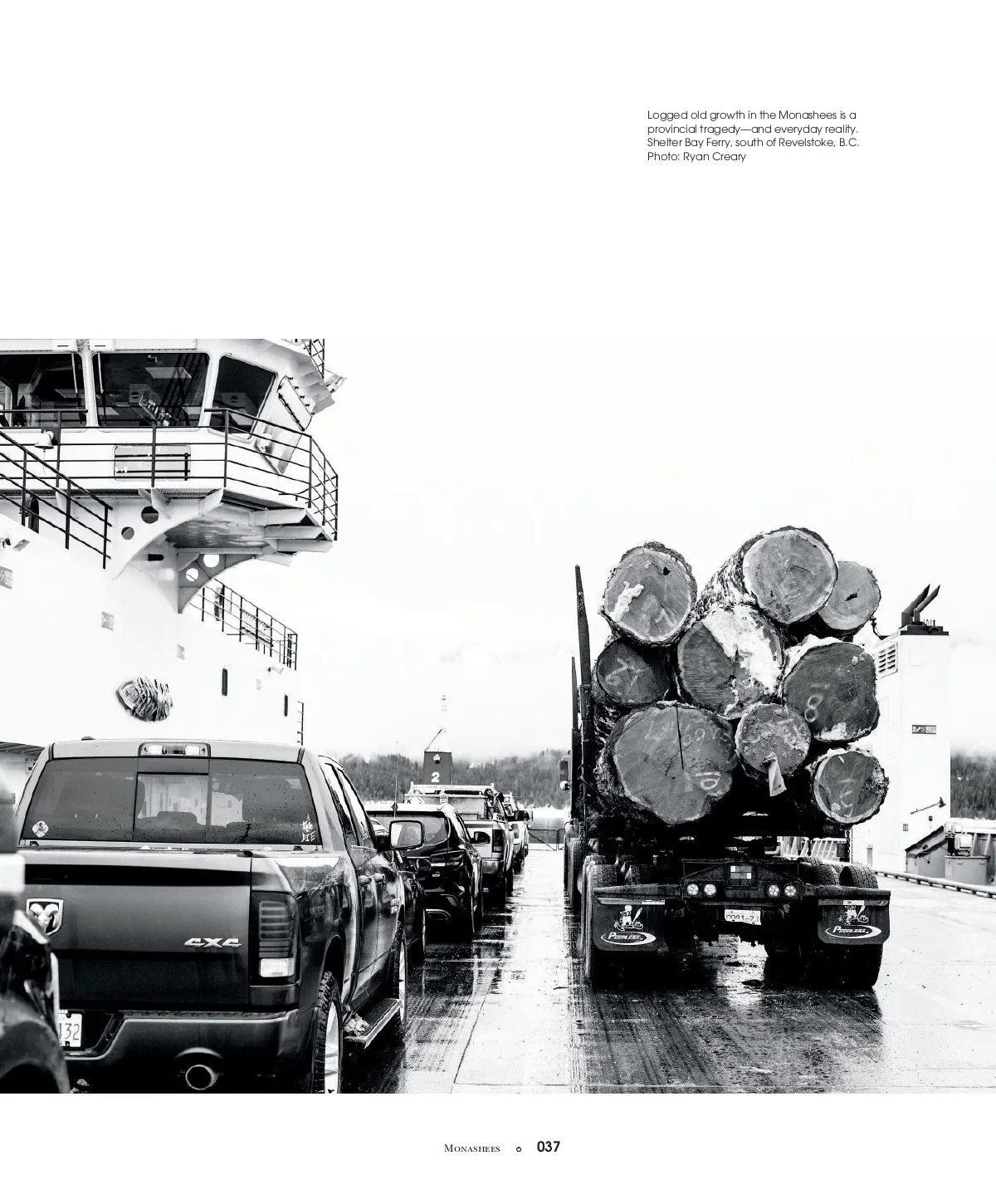
Words Erme Catino sign at the bottom of the snow-covered dirt road had warned of active logging up here, but our radio wasn’t picking up the frequency. I hesitantly turned my truck uphill around each blind corner, ready to stuff it into the snowbank at a moment’s notice. I figured it was better than a head-on collision with 40 tons of wood and steel. “There’s just one truck left up there,” said the driver at the base of the road that morning. His braided ponytail was tossed to the side as he removed the chains from his fully loaded rig. “Yep, you should be ok.” We were just hoping he got his numbers straight. It was a bit of risk, but we were searching for something better than the overcrowded early season experience back home. Though draft dodgers once arrived to this neck of the woods in droves during the Vietnam War, photographer Louis Arevalo and I were in the midst of our own exodus, escaping skiing’s status quo to heed the call of the Monashees. Utilizing plowed logging arteries to rise over 4,500 feet from the valley below, we climbed toward an early season powder stash west of Revelstoke, B.C. Bobbing, weaving and white-knuckling in 4-low, we finally reached the end of the road where the alpine cirques glowed a welcoming white. We had found winter at the beginning of December; it always seems to arrive a little earlier in the Monashees. The Monashee Mountains run north to south from Valemont, B.C. practically to the U.S. border. Spanning 329 miles with the highest peak, Mount Monashee, standing at 10,741 feet (British Columbia is known more for its vertical relief than its altitude), the Monashees are located on the westernmost flank of the Kootenay region. However, the area—sandwiched between the fertile Okanagan Valley to the west and the Selkirk Mountains to the east—is particu-larly known for commercial ski operations via cat, heli and touring lodges. When storms traveling across the province run into the Monashees, orographics take over, blanketing this zone with deep snow. I first experienced it five years ago, and I’ve made a point to visit every early season since. For me, perfectly spaced trees amid dark, stormy days are an excellent way to kick off a ski season. THE A FEW DAYS BEFORE our logging road extravaganza, we had pulled into Revelstoke after pushing 1,000 miles up from Salt Lake City. Our last leg included a ferry ride across Arrow Lake, where, obscured in the distance and directly across the bow of the ship, the Monashees loomed. The idea that a lifetime’s worth of skiing lay in all directions inspired an eagerness to explore, a notion that led us to the logging roads in the north central Monashees. When we arrived that morning at the end of the road, Are-valo and I shoveled out a spot for my truck as three off-duty patrollers from nearby Revelstoke Mountain Resort pulled in behind us. “You guys get anything via the radio?” We asked. “Nah, it hasn’t been working lately,” one of the patrollers answered. We shook our heads. Still jittery, I was relieved to click into my skis, feeling the rhythm and a sense of quiet stillness as we glided through winter’s early coat. We skinned up into the subalpine, avoid-ing the windswept, exposed terrain higher up, and found sheltered powder through open slots in the forest. The next day, a forecasted two inches of snow turned into eight, and we still had another day before flying into Sol Mountain Lodge—a touring lodge that sits next to Mona-shee Provincial Park in the central Monashees just south of Revelstoke. The storm shut down both sides of Highway 1 for avalanche control work—a blessing in disguise that kept us from thrashing into touring zones that weren’t quite ready yet. We hunkered down, drank coffee, then got in line with outbound traffic to watch avy crews annihilate a few slides, before driving around to the western flanks of the Monashees toward Cherryville, a lumberjack village that, like many other small towns in the western Kootenays, was a haven for Ameri-can draft dodgers in the late 1960s. 036 The Ski Journal
The Ski Journal Volume 14, Issue 1: Page 36