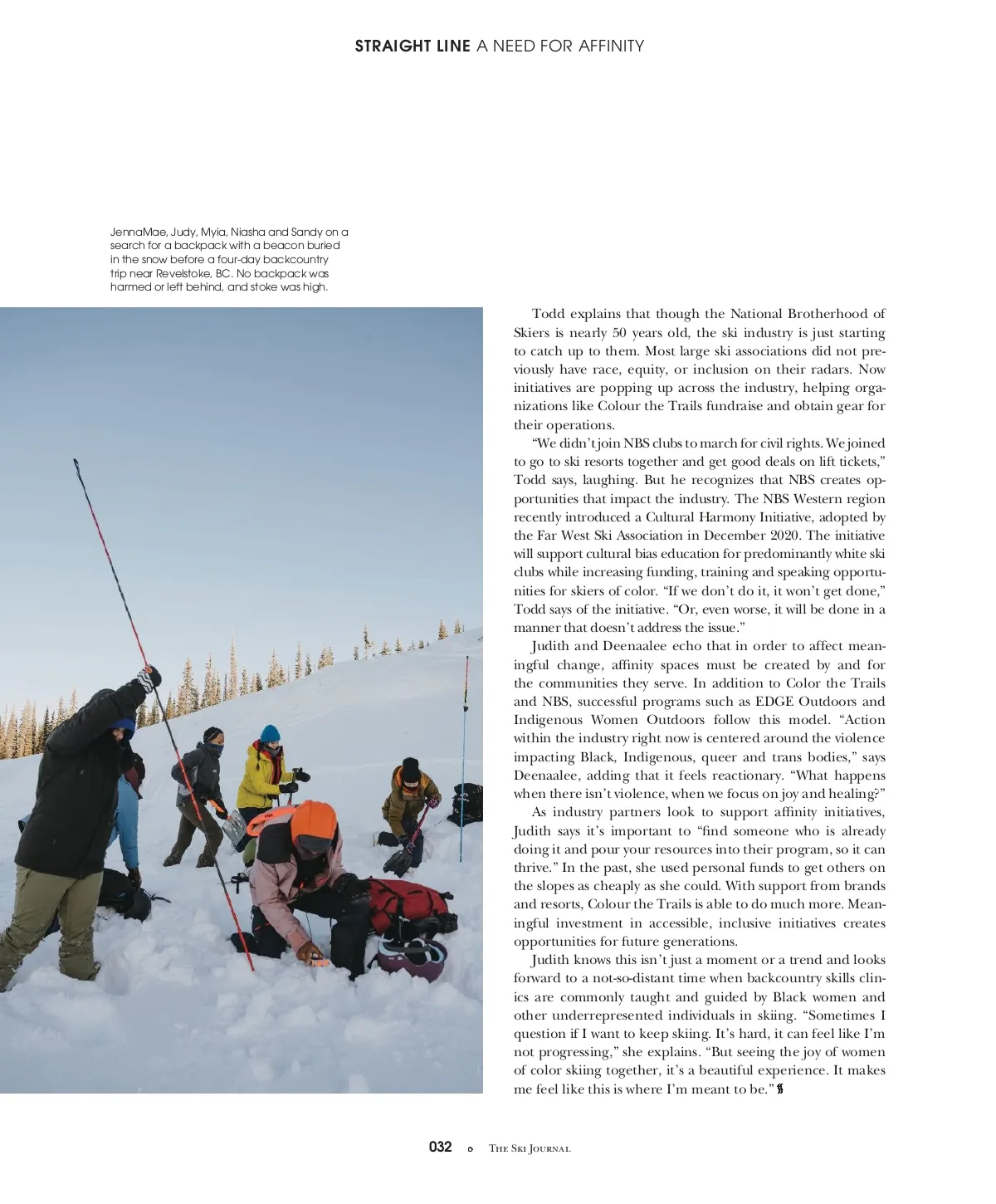
STRAIGHT LINE A NEED FOR AFFINITY JennaMae, Judy, Myia, Niasha and Sandy on a search for a backpack with a beacon buried in the snow before a four-day backcountry trip near Revelstoke, BC. No backpack was harmed or left behind, and stoke was high. Todd explains that though the National Brotherhood of Skiers is nearly 50 years old, the ski industry is just starting to catch up to them. Most large ski associations did not pre-viously have race, equity, or inclusion on their radars. Now initiatives are popping up across the industry, helping orga-nizations like Colour the Trails fundraise and obtain gear for their operations. “We didn’t join NBS clubs to march for civil rights. We joined to go to ski resorts together and get good deals on lift tickets,” Todd says, laughing. But he recognizes that NBS creates op-portunities that impact the industry. The NBS Western region recently introduced a Cultural Harmony Initiative, adopted by the Far West Ski Association in December 2020. The initiative will support cultural bias education for predominantly white ski clubs while increasing funding, training and speaking opportu-nities for skiers of color. “If we don’t do it, it won’t get done,” Todd says of the initiative. “Or, even worse, it will be done in a manner that doesn’t address the issue.” Judith and Deenaalee echo that in order to affect mean-ingful change, affinity spaces must be created by and for the communities they serve. In addition to Color the Trails and NBS, successful programs such as EDGE Outdoors and Indigenous Women Outdoors follow this model. “Action within the industry right now is centered around the violence impacting Black, Indigenous, queer and trans bodies,” says Deenaalee, adding that it feels reactionary. “What happens when there isn’t violence, when we focus on joy and healing?” As industry partners look to support affinity initiatives, Judith says it’s important to “find someone who is already doing it and pour your resources into their program, so it can thrive.” In the past, she used personal funds to get others on the slopes as cheaply as she could. With support from brands and resorts, Colour the Trails is able to do much more. Mean-ingful investment in accessible, inclusive initiatives creates opportunities for future generations. Judith knows this isn’t just a moment or a trend and looks forward to a not-so-distant time when backcountry skills clin-ics are commonly taught and guided by Black women and other underrepresented individuals in skiing. “Sometimes I question if I want to keep skiing. It’s hard, it can feel like I’m not progressing,” she explains. “But seeing the joy of women of color skiing together, it’s a beautiful experience. It makes me feel like this is where I’m meant to be.” 032 The Ski Journal
The Ski Journal Volume 15, Issue 1: Page 32