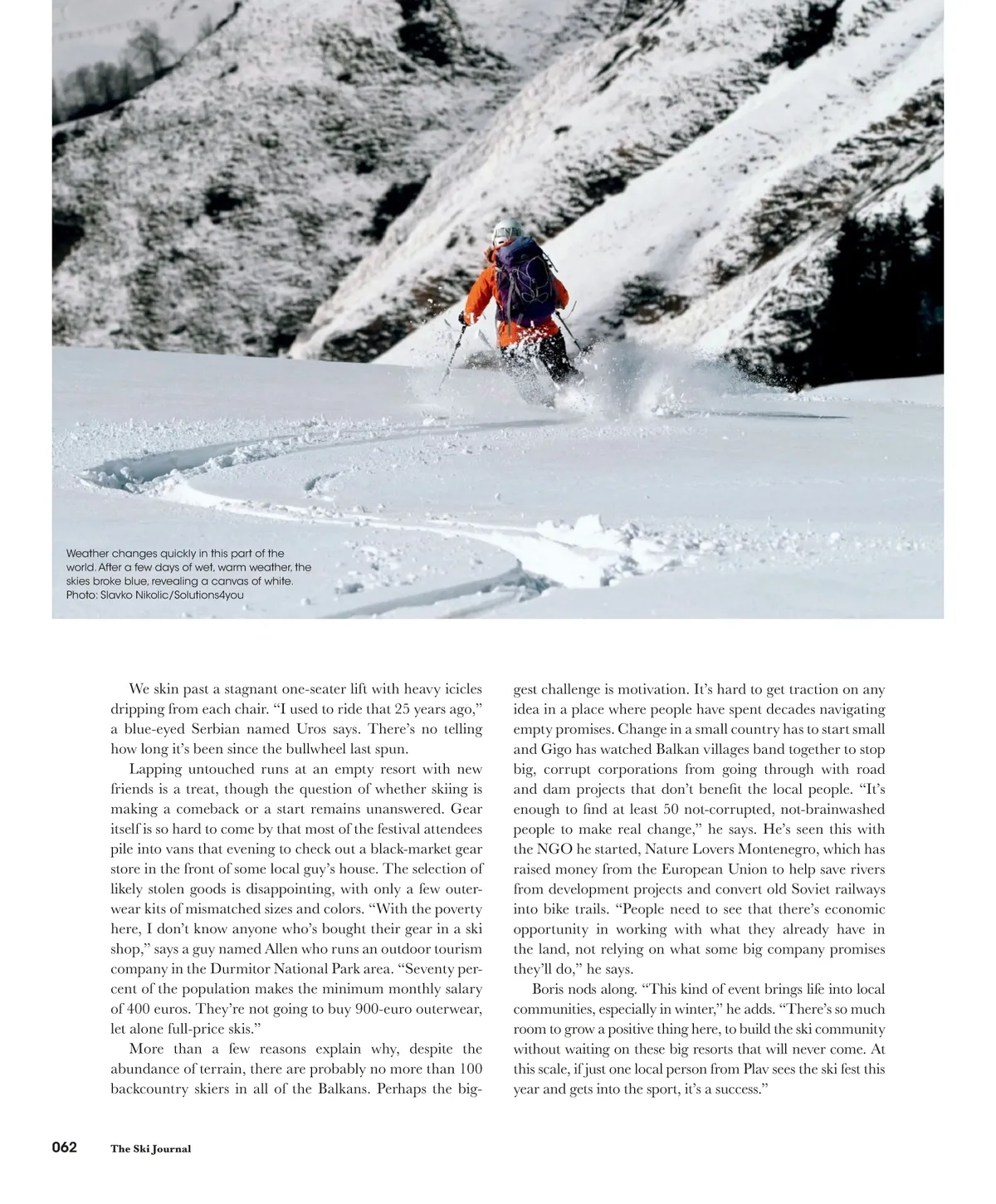
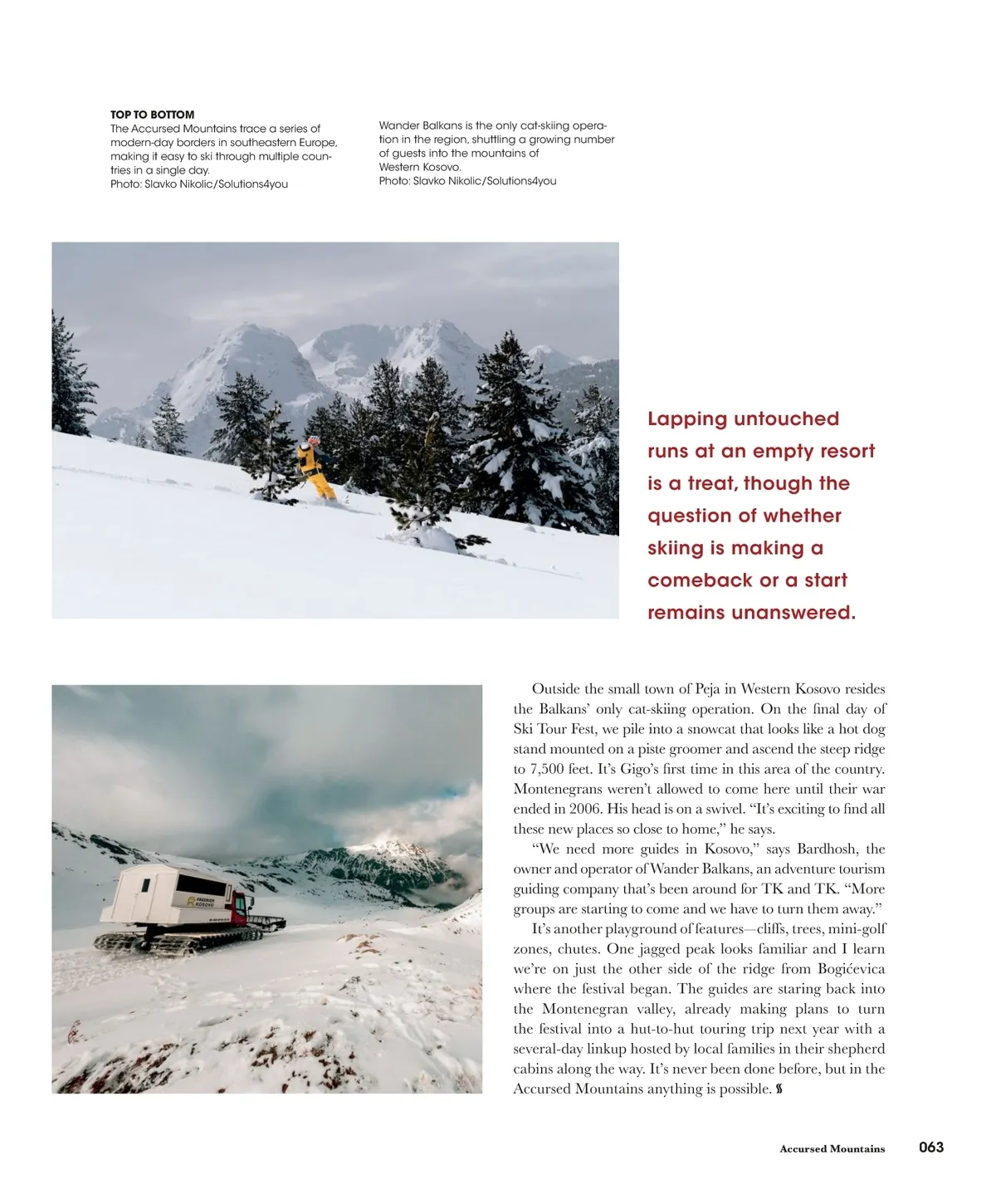
Weather changes quickly in this part of the world. After a few days of wet, warm weather, the skies broke blue, revealing a canvas of white. Photo: Slavko Nikolic/Solutions4you We skin past a stagnant one-seater lift with heavy icicles dripping from each chair. “I used to ride that 25 years ago,” a blue-eyed Serbian named Uros says. There’s no telling how long it’s been since the bullwheel last spun. Lapping untouched runs at an empty resort with new friends is a treat, though the question of whether skiing is making a comeback or a start remains unanswered. Gear itself is so hard to come by that most of the festival attendees pile into vans that evening to check out a black-market gear store in the front of some local guy’s house. The selection of likely stolen goods is disappointing, with only a few outer-wear kits of mismatched sizes and colors. “With the poverty here, I don’t know anyone who’s bought their gear in a ski shop,” says a guy named Allen who runs an outdoor tourism company in the Durmitor National Park area. “Seventy per-cent of the population makes the minimum monthly salary of 400 euros. They’re not going to buy 900-euro outerwear, let alone full-price skis.” More than a few reasons explain why, despite the abundance of terrain, there are probably no more than 100 backcountry skiers in all of the Balkans. Perhaps the big-gest challenge is motivation. It’s hard to get traction on any idea in a place where people have spent decades navigating empty promises. Change in a small country has to start small and Gigo has watched Balkan villages band together to stop big, corrupt corporations from going through with road and dam projects that don’t benefit the local people. “It’s enough to find at least 50 not-corrupted, not-brainwashed people to make real change,” he says. He’s seen this with the NGO he started, Nature Lovers Montenegro, which has raised money from the European Union to help save rivers from development projects and convert old Soviet railways into bike trails. “People need to see that there’s economic opportunity in working with what they already have in the land, not relying on what some big company promises they’ll do,” he says. Boris nods along. “This kind of event brings life into local communities, especially in winter,” he adds. “There’s so much room to grow a positive thing here, to build the ski community without waiting on these big resorts that will never come. At this scale, if just one local person from Plav sees the ski fest this year and gets into the sport, it’s a success.” 062 The Ski Journal
The Ski Journal Volume 17, Issue 2: Page 62