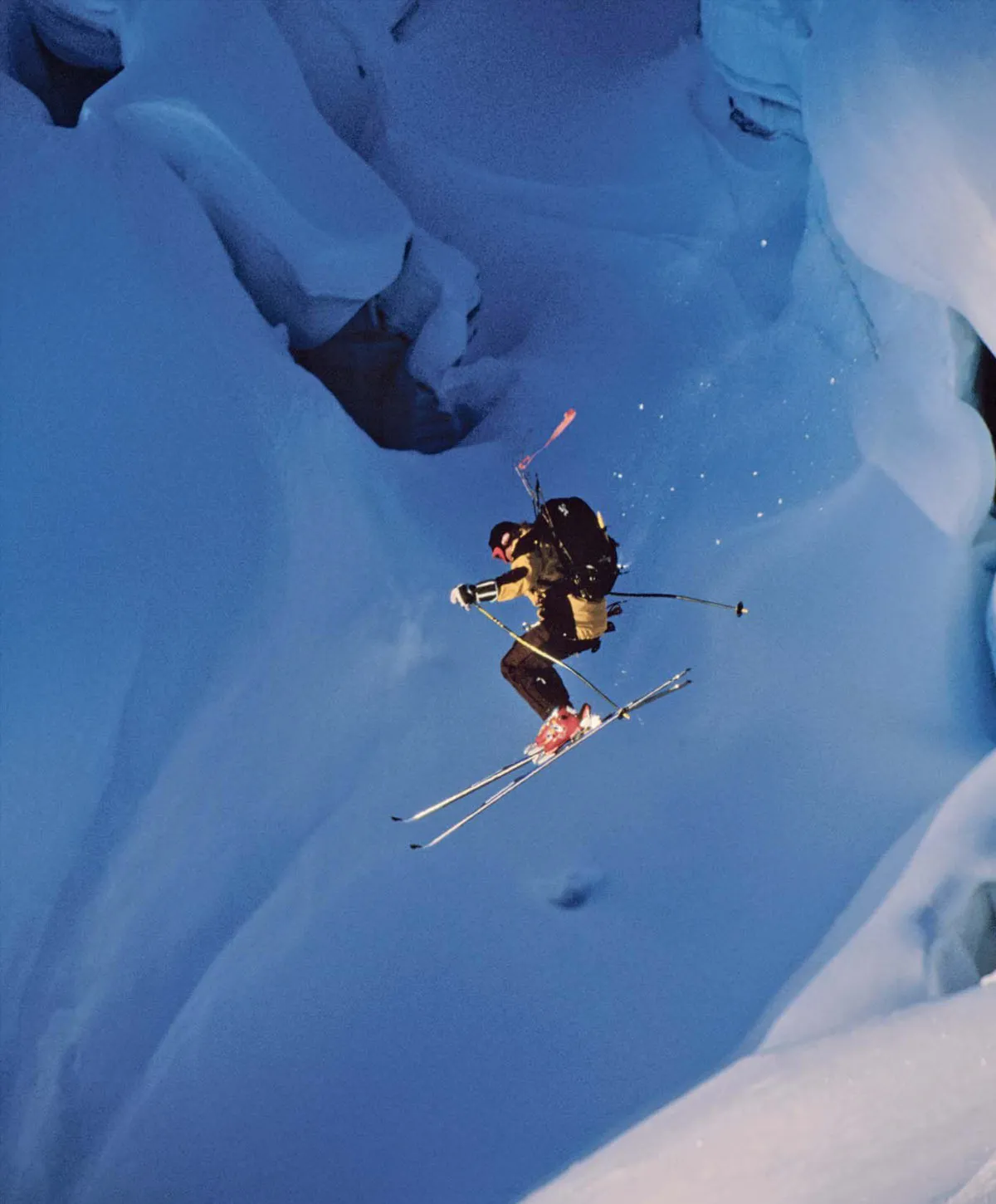
The Ski Journal: You grew up in New Mexico? Dean Cummings: I grew up in Los Alamos, the home of the atomic bomb. There were more PhDs per capita there than anywhere else in the world, with a diverse group of scientists from all over the world. There were five of us children—I was the second to youngest, with three sisters and one brother. My mom Carol ran a nursery and a flower garden. My dad, Boyd, was a computer technician, a big outdoorsman and an alpha skier. He took us to the rope tow and said, “You’re not riding the rope. You need to herringbone up the mountain, because this is how you learn how to ski.” So, we all herringboned up to the top and it’s truly what taught us our inside edges. Then he was like, “Now just get up there and reverse it. Here’s your snowplow. Here’s your pizza.” We already knew our edges, so we just all took off skiing. Where were you skiing? At a hill called Pajarito. It was open three days a week and on holidays. It’s kind of like something out of Killington [VT], where there are cuts through the trees with deep roads because that’s how they built it, getting trucks up there first. So, there were big jumps off the Jeep roads. Your family moved around a bit as well? We jumped from New Mexico to Texas, California, then back to New Mexico. My dad loved New Mexico. The Boy Scouts was a big deal for our family. My dad was a scout leader. Eventually, I got into the Santa Fe Mountain Center. I was ditching school too much and the principal was like, “I need you to go into the program. It will be something that I think will be good for you. It’s a two-week backpacking trip in Colorado. [Is that] something you’re interested in?” I’m like, “Yeah.” I was 14 by then. I got invited back to be a counselor’s helper, and we would go raft the Gates of Lodore into Utah, an eight-day trip. We climbed a ton of 14ers on the Collegiate Range [of Colorado] on a two-week backpacking trip. I remember the teacher saying, “Well, what are you going to do, Dean, if you’re not going to make it to class, and all you want to do is go skiing? How are you going to make a living?” I’m like, “I’m going to make a living in the mountains.” They’re like, “You’ve got to be kidding me. There’s no such thing.” With the Santa Fe Mountain Center, I got to see climbers make a living in the mountains. Kenny Sims was studying to be a volcano scientist and was guiding in Yosemite, teaching in Santa Fe at the Mountain Center, and then guiding all over the world. He was the first guy that made me think that discipline was important and that you could make a living at something you’d like to do. He’d wake me up at 5 a.m. and say, “Hey, let’s go climbing before the other kids get up.” He would solo these 200-foot lines, then he’d set a rope and bring me up, and we’d climb a couple things before morn-ing. He opened my eyes. “On a shoot with Matchstick Productions in 1996, we reached this feature outside of Valdez, AK as the light was fading. My camera’s motor drive was broken, but I was able to compose and capture the image. I called it ‘Child Born of Water,’ and it’s my personal favorite over 20 years of shooting. After I saw the image, I felt I could move on from ski photography, because I was so satisfied to capture such a shot of the lifelong buddy I’d met in fourth grade.” Photo: John Fullbright Were you also a ski racer? With five kids, my parents couldn’t afford that. I was tree ski-ing and mogul skiing and hiking every cliff I could find. Then a Warren Miller film opened my eyes. It was like, “Holy moly, here’s this guy, Scot Schmidt, jumping off these big cliffs in Squaw [Valley, CA]—that’s what I’m going to do.” I told my dad, “I’m going to take a year off before college and go to Utah and work at a ski resort and load chairs.” I came back afterward and said, “Dad, I don’t think I’d make it through the first year of college with what I want to do in the outdoors. I’m going to make the U.S. Ski Team.” He said, “You got to be kidding me. Tennis, golf—anything but skiing.” But I made the team. It took me three or four years competing USSA moguls, and he was proud. He talked to me a lot more again. He said, “Time to put some business behind your ability. Get a desk.” By then I was living in Telluride and Summit County. I’d live in a van and work construction in the summer, save up, and ski all winter. When I got to Telluride [in 1991], the posse that was going into the backcountry was so tight. They had a terrain-management protocol and a niche group of around 30 people. Half of them were pro skiers, but super down to earth, great people. The other half were just rastas and they took me under their wing. They were like, “Kid, you love skiing. It’s obvious. You could probably make it.” They taught me so much. Scott Kennett was one of the guys—he skied in the [Greg] Stump films. One day he goes, “Hey Deano, you ever heard about this contest in Valdez, AK?” He gave me a Xerox copy of his application. I submitted a couple first descents I’d done in Colorado and some photos of big jumps, and I got invited. Michael Cozad owned the Tsaina Lodge and was part of the first crew in Valdez. They had this crazy idea to host the World Extreme Championships. I called him up and asked, “So, what’s it like up there?” “Well, I’m standing at 2,300 feet [of elevation],” he said. “I got about 17 feet of snow in the yard. That doubles every thousand feet going up the mountains.” I’m like, “Wow, bigger mountains.” They’re five, six, seven thousand feet right out of the ocean. I’m starting to get a grasp of the scale. “How big is the mountain range you live in?” “Oh, it’s about 260 miles long. It’s all glaciated every-where you look.” I’m like, “Wow, sounds like 50 to 100 feet of snow up in the high country. All right, I’m coming,” 060 The Ski Journal
The Ski Journal Volume Eleven, Issue Three: Page 60