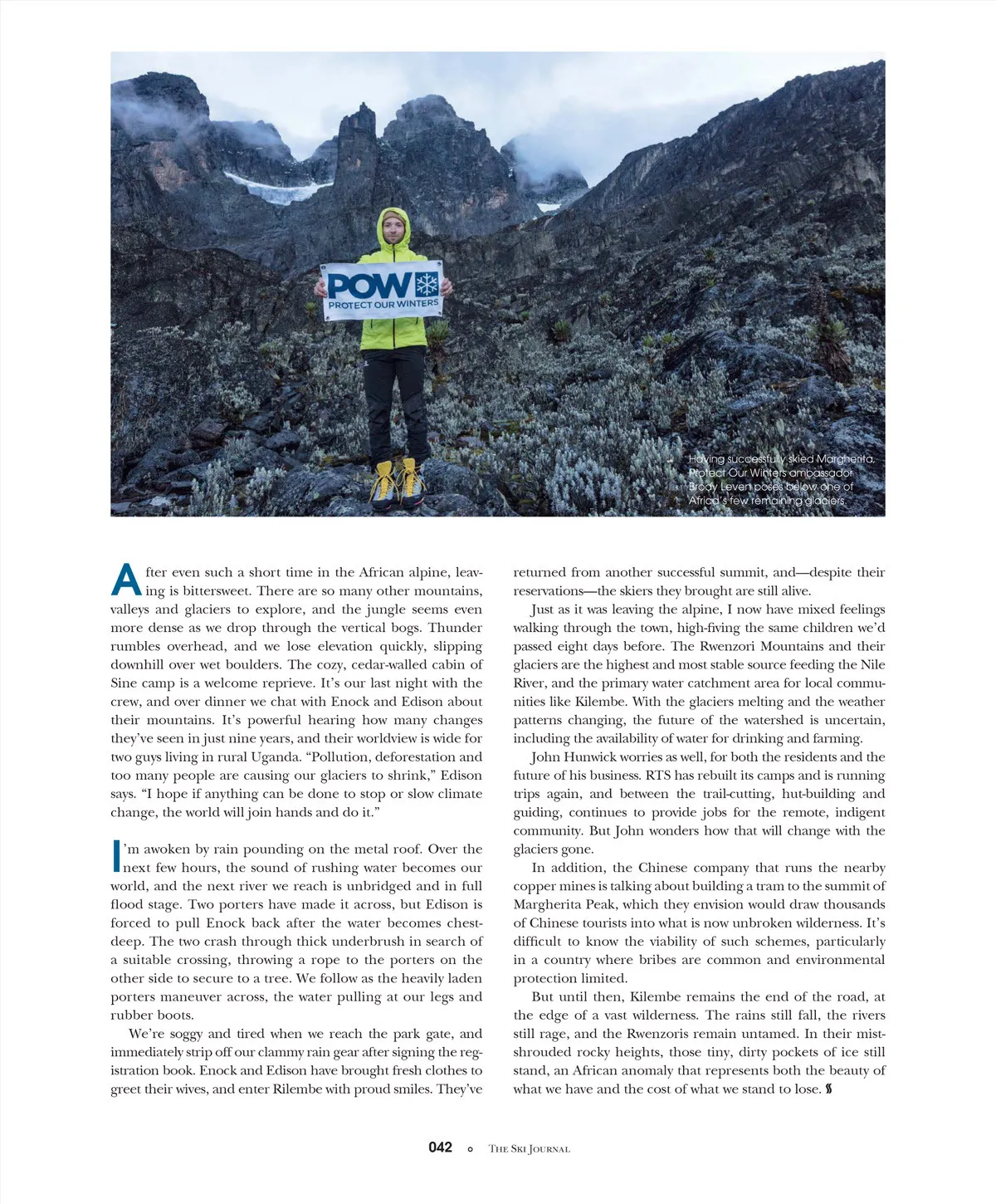
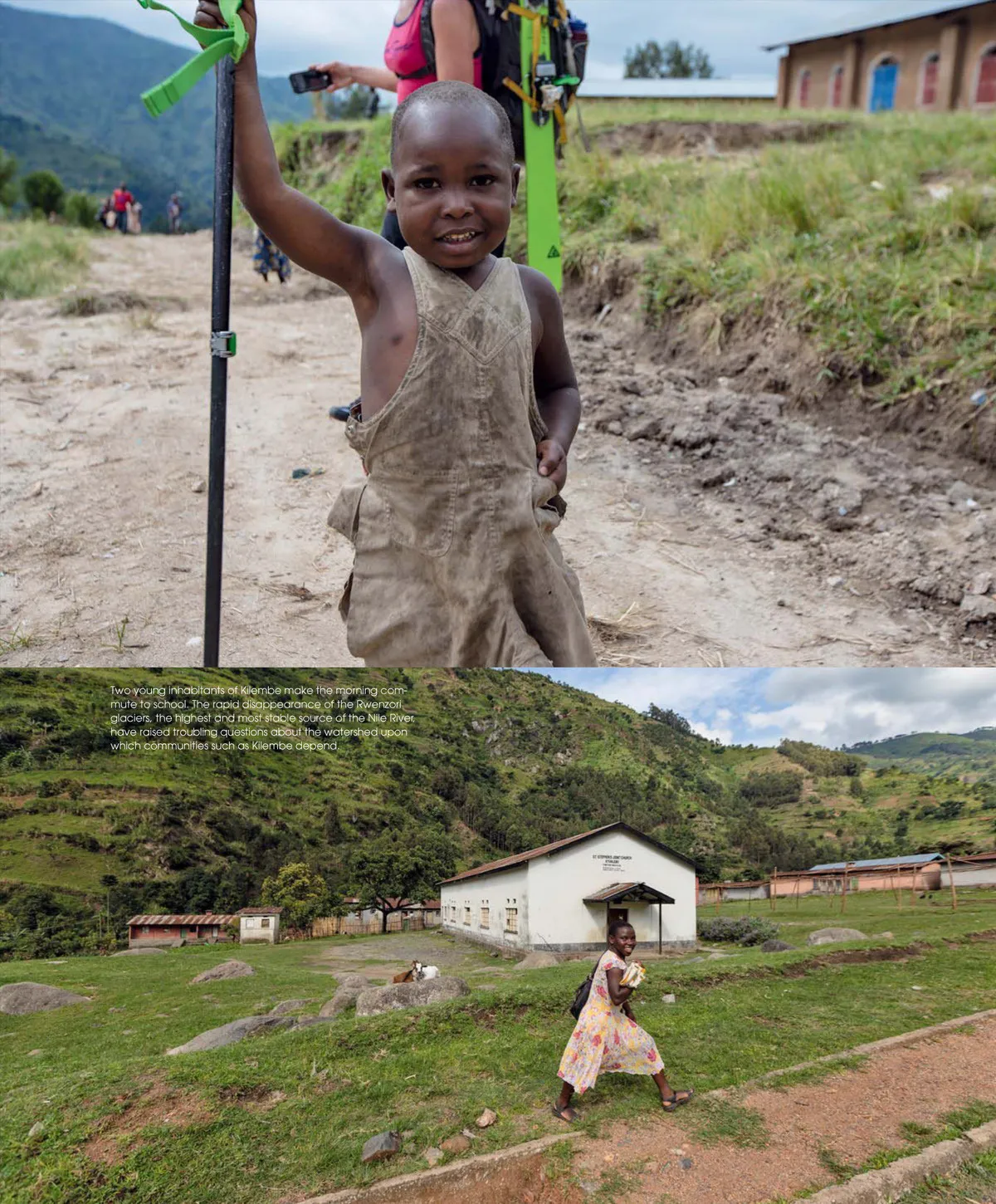
Having successfully skied Margherita, Protect Our Winters ambassador Brody Leven poses below one of Africa’s few remaining glaciers. fter even such a short time in the African alpine, leav-ing is bittersweet. There are so many other mountains, valleys and glaciers to explore, and the jungle seems even more dense as we drop through the vertical bogs. Thunder rumbles overhead, and we lose elevation quickly, slipping downhill over wet boulders. The cozy, cedar-walled cabin of Sine camp is a welcome reprieve. It’s our last night with the crew, and over dinner we chat with Enock and Edison about their mountains. It’s powerful hearing how many changes they’ve seen in just nine years, and their worldview is wide for two guys living in rural Uganda. “Pollution, deforestation and too many people are causing our glaciers to shrink,” Edison says. “I hope if anything can be done to stop or slow climate change, the world will join hands and do it.” ’m awoken by rain pounding on the metal roof. Over the next few hours, the sound of rushing water becomes our world, and the next river we reach is unbridged and in full flood stage. Two porters have made it across, but Edison is forced to pull Enock back after the water becomes chest-deep. The two crash through thick underbrush in search of a suitable crossing, throwing a rope to the porters on the other side to secure to a tree. We follow as the heavily laden porters maneuver across, the water pulling at our legs and rubber boots. We’re soggy and tired when we reach the park gate, and immediately strip off our clammy rain gear after signing the reg-istration book. Enock and Edison have brought fresh clothes to greet their wives, and enter Rilembe with proud smiles. They’ve A I returned from another successful summit, and—despite their reservations—the skiers they brought are still alive. Just as it was leaving the alpine, I now have mixed feelings walking through the town, high-fiving the same children we’d passed eight days before. The Rwenzori Mountains and their glaciers are the highest and most stable source feeding the Nile River, and the primary water catchment area for local commu-nities like Kilembe. With the glaciers melting and the weather patterns changing, the future of the watershed is uncertain, including the availability of water for drinking and farming. John Hunwick worries as well, for both the residents and the future of his business. RTS has rebuilt its camps and is running trips again, and between the trail-cutting, hut-building and guiding, continues to provide jobs for the remote, indigent community. But John wonders how that will change with the glaciers gone. In addition, the Chinese company that runs the nearby copper mines is talking about building a tram to the summit of Margherita Peak, which they envision would draw thousands of Chinese tourists into what is now unbroken wilderness. It’s difficult to know the viability of such schemes, particularly in a country where bribes are common and environmental protection limited. But until then, Kilembe remains the end of the road, at the edge of a vast wilderness. The rains still fall, the rivers still rage, and the Rwenzoris remain untamed. In their mist-shrouded rocky heights, those tiny, dirty pockets of ice still stand, an African anomaly that represents both the beauty of what we have and the cost of what we stand to lose. 042 The Ski Journal
The Ski Journal Volume Eleven, Issue Three: Page 42