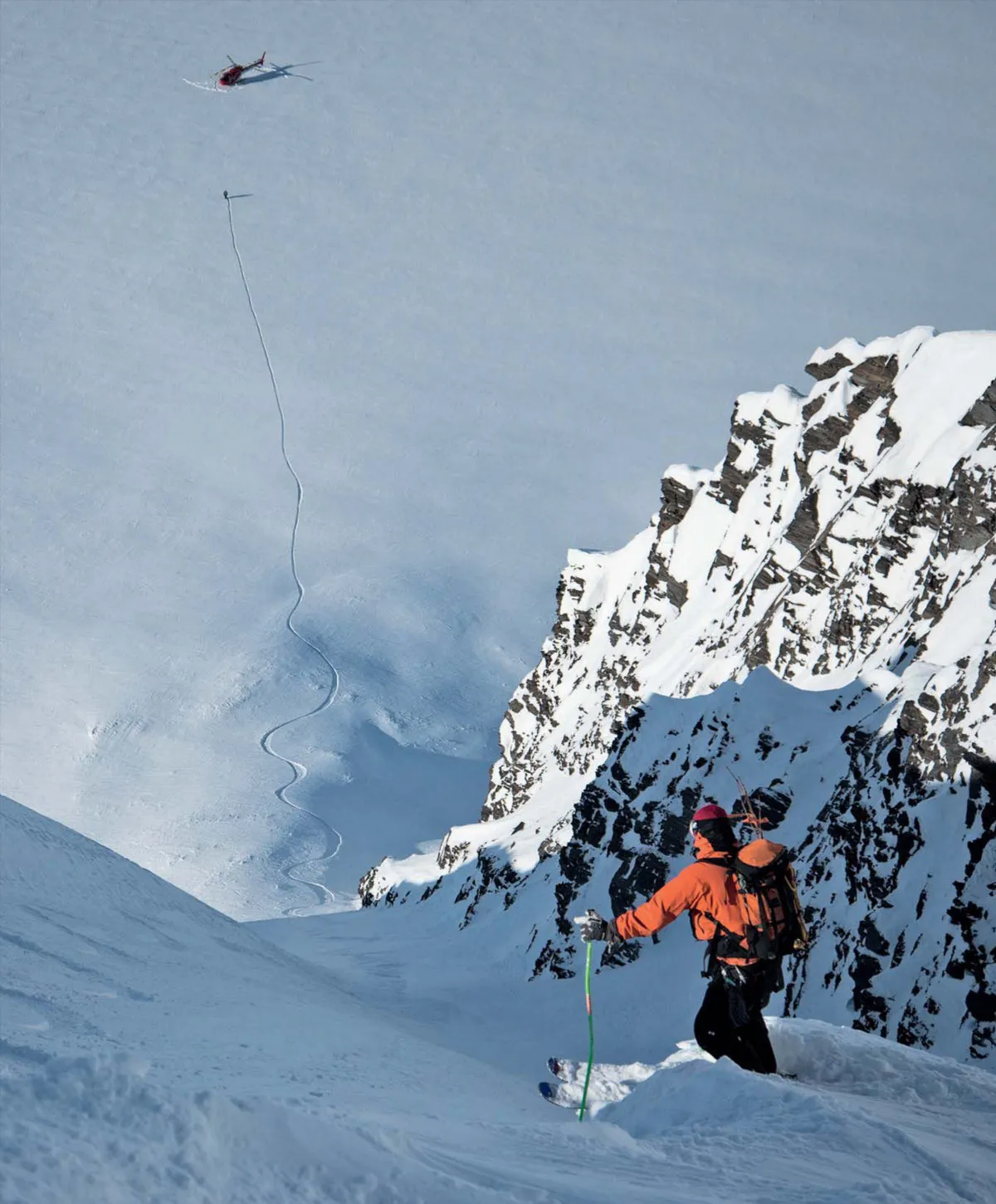
The town itself is evolving, but it hasn’t changed much. It runs on a $70 million budget for about 4,000 people. They built this cruise ship dock, but honestly there’s not been one cruise ship to it. This town has always been a greedy town. It was the first interior route into Alaska, so they haven’t needed the most skilled entrepreneur running this place. You sit here and look at what they spent $70 million on this last year. You see some new street lamp posts. And who are all these guys leaving town with all this money? Recently they’re like, “Dean, what do you mean about this tram idea? What are you talking about renewable resources?” Oil’s declining. Towns like Valdez will do fine, but other towns in the state are going to crash hard. For the first time there’s the opportunity for renewable resources, for people to come and take pictures of this beauty, make some tracks in the snow. You don’t have to drill and blast it and haul it away to make money. You walk into the post office here, and you’re like, “Why aren’t people high-fiving and hugging like they are in Tel-luride?” And you’re like, “Oh, it’s because most people live here just to make money on oil, save it all, retire and leave.” So now it’s just starting to change. When the kids were going to start school, my wife and I had to decide where to live: Utah, Colorado, or Alaska? My son was like, “Dad, the fish aren’t very big in Utah and Colorado.” Then my daughter was like, “I’m named after a glacier. I’m an Alaskan girl.” Our big malamute hated the heat. He would howl and face dead north for four hours every day. And my wife was like, “You know, the school [in Utah] is $12,000 per student. Let’s get our kids back to Alaska.” And we seem to do better up here with business too, so we jumped into it. And I think instead of reading about history, you make history here. Everything you touch is previously untouched in the mountains. My kids are going to be good at creating their own legacy and creating a little piece of history. They can open horizons for other people and their kids and their families. There’s a lot of opportunity. Can you tell me a bit more about your family? My wife’s name is Karen and my son’s name is Wyatt Kodiak Cummings. He loves his middle name. You say, “Hey boy, what’s your name?” and he’ll answer, “Wyatt Kodiak Cum-mings.” He’s 14 now. My daughter Tesslina is named after the Tazlina Glacier, but she’s a Tess instead of a Taz. My little girl Brooke’s four now. She’s Brooke Alaska Cummings. Karen and I met in Aspen when we were already in our 30s. We both knew what we wanted—we wanted to start a family. She came to Alaska, I picked her up in Anchorage and it took us two and a half days to get home. It was raining in the interior and Thompson Pass was closed, so we had to sleep in the truck on the backside of the pass. It snowed 17 feet in town that week, and I was like, “Well, this will probably be the end of this little relationship.” And she says, “That was the most amazing snow I have ever seen.” We got around 32 feet of snow in the mountains that week. “‘Page 1’ of the Books. You can see the zone from the Mile 23 switchback, on the way up Thompson Pass, rising immediately from the Heiden Glacier. When Dean first arrived in Alaska for the World Extreme Ski Champion-ships in 1991, he and the other athletes wondered if such terrain was even skiable. But the Heiden was just the start, and soon Dean and others began pushing even deeper into the Chugach Mountains.” Photo: Josh Cooley Then Wyatt came into our life, which was amazing. Tesslina had some pretty heavy health issues, and we got her through that. We did homeopathic stuff because Western medicine was going to kill her, and it obviously wasn’t working. Then Brooke came into our life, and it was super awesome to have a baby in the house again. And they all love the Alaska life too, from the sounds of it. It’s the balance of life and wildness and being able to harvest from it, too. Having all these fish and moose makes for a pretty great lifestyle. I want to see the town evolve from being more transient. I want to get this tram built so people can move here and live here because they love snow and mountains and the healthier lifestyle the mountains provide. Is that how you leave your legacy? Maybe. This dock is key to the whole thing. My tram site’s only a mile away, and this property above us is where we would put some homes, a village over there by Mineral Creek. I’ve been working on it for six or seven years now. The tram is designed as far as the cables and the steel, and we just finished the feasibility study. But here we are, living in this town and the whole town has its back to the ocean. This is the only part of town that really faces the ocean. If I can get this project done, it’ll turn the town to the ocean and people will be more in tune with their surroundings. You could have 12,000 people living in this area, and you could open up some of the high alpine to allow people to get out and experience a lifestyle beyond the local Safeway, restaurants and bars. I’d like to see a European mentality here. This extreme weather we deal with, and these steeper mountains and deeper snowpack and more glaciated mountains offer the opportunity to learn some great skills. Our access has evolved immensely. We’re taking advantage of better road systems, better plowing systems, better access points to get into the wilderness. We’re going deeper, and the technology has evolved our techniques so much more. We’re skiing bigger and faster in more complicated terrain. With terrain management, the steep life protocols, and top-down terrain-management protocols, I think we have a lot to offer the world to help people go to the next level in their skiing and riding and mountaineering and whatever they’re into. That’s something I love to share. I don’t take it for granted that I get to learn a lot of skills up here that a lot of places wouldn’t allow me to learn. I want to share it with the world. Visit alaskahelicopterskiing.com to learn more about Dean and H2O Guides. 072 The Ski Journal
The Ski Journal Volume Eleven, Issue Three: Page 72